
10 Travel Tips That Have Saved Us Time, Money, and Stress

Don’t be this person at the airport! In her defense, she packed for 11 months in SE Asia.
by PD Owner Jonathan Tackaberry
One of the questions we get asked most often by friends and neighbors in Palmetto Dunes is, “What are the best travel tips you have learned over the years?”
After more than 26 years of traveling together and visiting 76 countries, we have learned plenty of lessons. Some came from careful planning. Others came from mistakes we would rather not repeat.
The good news is that many travel headaches can be avoided with a little preparation. Here are ten travel tips that have helped us save money, reduce stress, and enjoy our adventures even more.
Tip #1: Book Airfare Smart
Airfare is often one of the biggest expenses of any trip.
When searching for flights, we recommend using a private browser and clearing your cookies before beginning your search. If you have access to a VPN, that can be helpful as well. While opinions vary on whether airlines adjust pricing based on search history, it is an easy step that costs nothing.
Once we find a fare that fits our budget, we always book directly through the airline rather than a third-party website. If possible, consider purchasing refundable airfare. If prices drop after booking, it is often easier to obtain a travel credit or rebook at the lower fare when dealing directly with the airline.
After booking, we place our flights on Google Flights price tracking. If fares drop, Google will send you an email notification.
Another factor that many travelers overlook is connection time between flights. While a 45-minute layover in airports such as Atlanta, Dallas, or Miami may look sufficient on paper, it often is not. By the time your aircraft reaches the gate, passengers deplane, and you make your way across the airport, you may be rushing to catch your next flight. If there are any delays, the risk of missing your connection increases significantly. Even if you make the flight, your luggage may not.
For domestic flights, I generally try to schedule layovers of at least 90 minutes to two hours. For international flights, I prefer closer to three hours. It may mean spending a little more time in the airport, but it greatly reduces stress and provides a buffer when travel does not go exactly as planned.

If you pack light for your trip, you will have more room for souvenirs. Crystal demonstrating this theory to the extreme in a Souq in Qatar, Oman.
Tip #2: Pack Less Than You Think You Need
Almost everyone overpacks.
We certainly did.
The reality is that most destinations have stores, pharmacies, and laundry services. Most 4 and 5 star hotels offer laundry service. While it can seem expensive at first glance, it is often far cheaper than paying overweight baggage fees on multiple flights.
Packing lighter makes navigating airports, train stations, cruise terminals, and hotel lobbies significantly easier. As a bonus, if your suitcase isn’t completely full, then you will have more room for souvenirs.
As a general rule, if you are debating whether to bring something, you probably do not need it.
Tip #3: Use AirTags or Similar Luggage Trackers
One of the best travel purchases we have made in recent years is Apple AirTags.
We place them in checked luggage, carry-on bags, and backpacks.
There have been several occasions when we knew exactly where our luggage was before the airline did. Thankfully, we have never permanently lost a suitcase, but there have been a few moments when our luggage seemed determined to take its own vacation.
The peace of mind alone makes them worth the investment.

Don’t get stranded at Everest Base Camp without a map.
Tip #4: Download Offline Google Maps
One of the biggest challenges travelers face overseas is navigating when cell service is unavailable, unreliable, or unexpectedly expensive. An offline map can prevent you from getting lost, help you find your hotel, and provide an extra layer of safety when using taxis or rideshare services.
Before leaving for an international destination, we always download offline maps using Google Maps.
Here is how:
- Open Google Maps while connected to WiFi.
- Search for your destination.
- Tap your profile picture in the upper right corner.
- Select “Offline Maps.”
- Choose “Select Your Own Map.”
- Adjust the map area you want.
- Tap “Download.”
Even without cell service, your GPS location will continue to appear on the map.
For safety reasons, I also monitor our route whenever we are riding in a taxi or rideshare service in a foreign country. Having an offline map allows me to verify that we are heading in the correct direction even if cell service is unavailable.
We have used this feature throughout Europe, Southeast Asia, Central America, and the Middle East.
Tip #5: Get Local Currency Before You Leave Home
Many travelers wait until they arrive to exchange money.
We recommend doing it before you leave.
Larger local banks in the US can provide Euros and Mexican Pesos immediately. Less common currencies may require one to two weeks to order.
Obtaining currency through your local bank often provides a better exchange rate than airport exchange counters. It also helps you avoid paying excessive exchange fees and ATM fees immediately upon arrival.
Having a small amount of local currency available for taxis, tips, or small purchases can make your first day much easier.
Tip #6: Notify Your Bank and Carry Multiple Payment Methods
Before traveling internationally, notify your bank and credit card companies about your travel plans.
This simple step can help prevent legitimate purchases from being flagged as suspicious and your cards from being temporarily frozen.
We also recommend carrying at least two credit cards and storing them separately. If one card is lost, damaged, or declined, you have a backup available.
Technology is wonderful until it is not.
Tip #7: Arrive Early for Cruises and Major Departures
If there is one lesson we have learned repeatedly, it is this:
Never cut it too close.
If we are taking a cruise, we almost always arrive at least one day before embarkation.
Flight delays, weather issues, and mechanical problems happen every day. Missing a flight is frustrating. Missing a cruise because your flight was delayed is significantly worse.
The extra hotel night is usually far less expensive than trying to catch up with a cruise ship.
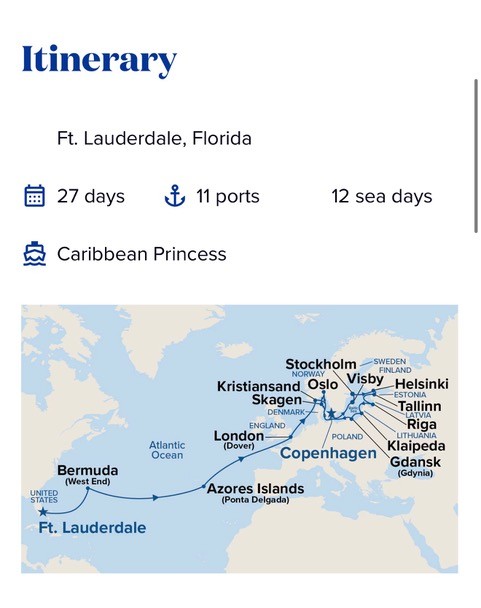
Our transportation for our 2027 European Adventure. Who wants to join us?
Tip #8: Have a Plan for Jet Lag
Jet lag can steal the first few days of an otherwise wonderful trip.
We have found that staying hydrated, getting outside in natural sunlight, and adjusting your sleep schedule before departure all help. There is also a free app for your phone called “Timeshifter” than can help you develop a pre-trip adjustment plan.
One of the most interesting solutions we have discovered is crossing oceans by cruise ship. We have crossed both the Atlantic and Pacific Oceans on cruise ships and found that the gradual time changes allow your body to adjust naturally. By the time you arrive, there is often little or no jet lag. Plus you can see some amazing ports along the way!
We discuss this technique in greater detail in one of the articles on our travel blog for anyone interested in learning more about using ocean crossings as a transportation option. https://allinglobaltravel.com/why-we-choose-to-cross-oceans-by-cruise-instead-of-flying
Tip #9: Consider Travel Insurance
Travel insurance is not exciting.
Neither are medical emergencies, cancelled flights, missed connections, or lost luggage.
For major international trips, cruises, or expensive vacations, travel insurance can provide valuable protection and peace of mind.
Fortunately, we have rarely needed to use it. When we have, we were very glad we had it.

Slow down and take it all in. Beach walk in Salalah, Oman
Tip #10: Slow Down
Perhaps the biggest lesson we have learned over the years is that slower travel often creates the best memories.
Earlier in life, we tried to see everything. We packed every day with activities and raced from one attraction to the next.
Today, some of our favorite memories come from slowing down.
The places are memorable, but the people and experiences are what stay with you.
Final Thoughts
Travel does not have to be complicated to be rewarding.
A little planning can save money, reduce stress, and help you focus on what matters most: enjoying the experience and building lasting memories.
We are always learning new travel tricks ourselves, and some of the best advice we have ever received came from fellow travelers.
What is the best travel tip you have learned over the years?
Do you have a packing trick, airfare strategy, favorite travel app, or lesson learned that makes your trips easier?

Making Family Memories at Machu Picchu, Peru
We would love to hear from you. There is a wealth of travel knowledge within the Palmetto Dunes community, and we suspect many of us can learn from one another. Contact us at [email protected] if you have any questions or want to share your tips or stories.