
LAGOON SYSTEM
Lagoon Operations
A Living Water System at the Heart of Our Community
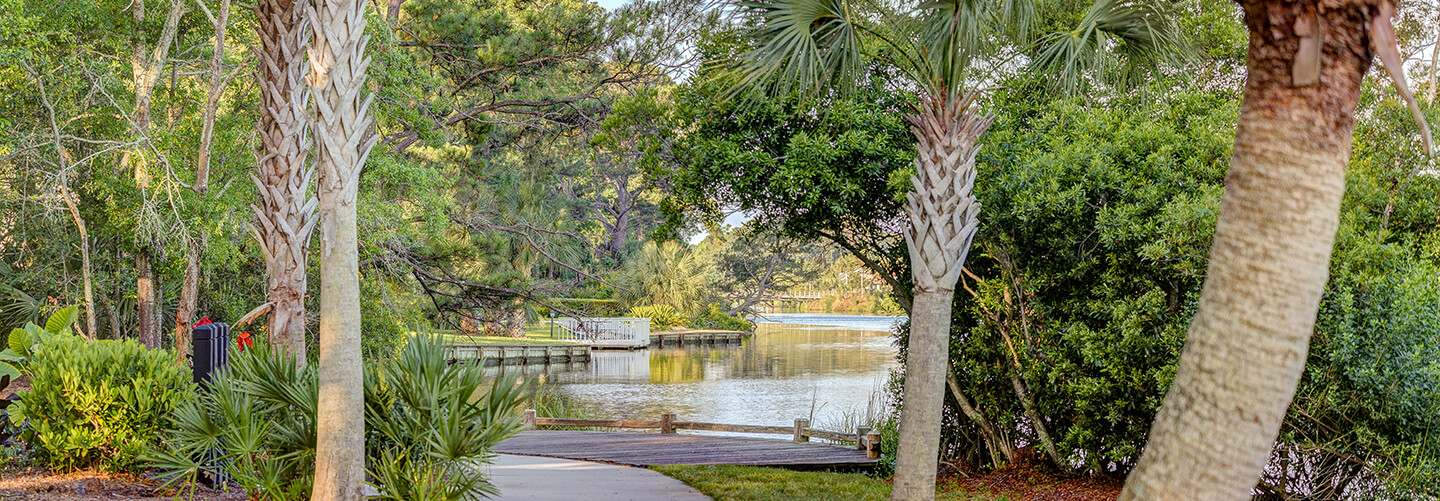
Winding quietly through the neighborhood, the Palmetto Dunes lagoon system is more than a scenic backdrop—it is a living, dynamic network of water that shapes our landscape and supports daily life within the community.
These calm waterways wind behind homes, under bridges, and alongside leisure paths, connecting more than eleven miles of habitat, recreation, and natural beauty. Beneath the surface, the lagoons are constantly at work—moving water, supporting wildlife, and helping maintain the balance that makes Palmetto Dunes a unique coastal community.
Why the Lagoon Matters
The lagoon system plays a vital role in how the community functions. During rainfall, it acts as a natural stormwater system, slowing and storing water to reduce flooding and protecting roads, pathways, and property. At the same time, it supports a thriving coastal ecosystem and enhances the experience of living in Palmetto Dunes—from peaceful views to kayaking and fishing.
Maintaining this balance requires ongoing attention, planning, and stewardship.
 Understanding Lagoon Health
The lagoon is a tidal, brackish system, influenced by both freshwater runoff and saltwater exchange. Its condition naturally changes with rainfall, temperature, tides, and seasonal cycles. Factors such as nutrient levels, sediment buildup, vegetation growth, and water circulation all play a role in overall lagoon health.
Because many of these influences are environmental, change is expected. The goal is not to eliminate variation, but to manage the system in a way that supports long-term balance.
How We Manage the System
While we cannot control every factor, we focus on the elements that have the greatest impact.
Water levels are periodically lowered to promote circulation and help flush excess nutrients from the system. Shoreline vegetation is maintained to improve water flow and reduce organic buildup, while debris removal helps protect both water quality and appearance. Over time, sediment buildup is addressed through planned dredging efforts that restore depth and capacity.
In addition, we actively monitor lagoon conditions through routine inspections and water quality testing. These efforts provide a clearer understanding of how the system is performing and allow us to respond more effectively.
A Proactive Approach
Managing the lagoon requires more than individual actions—it requires a plan.
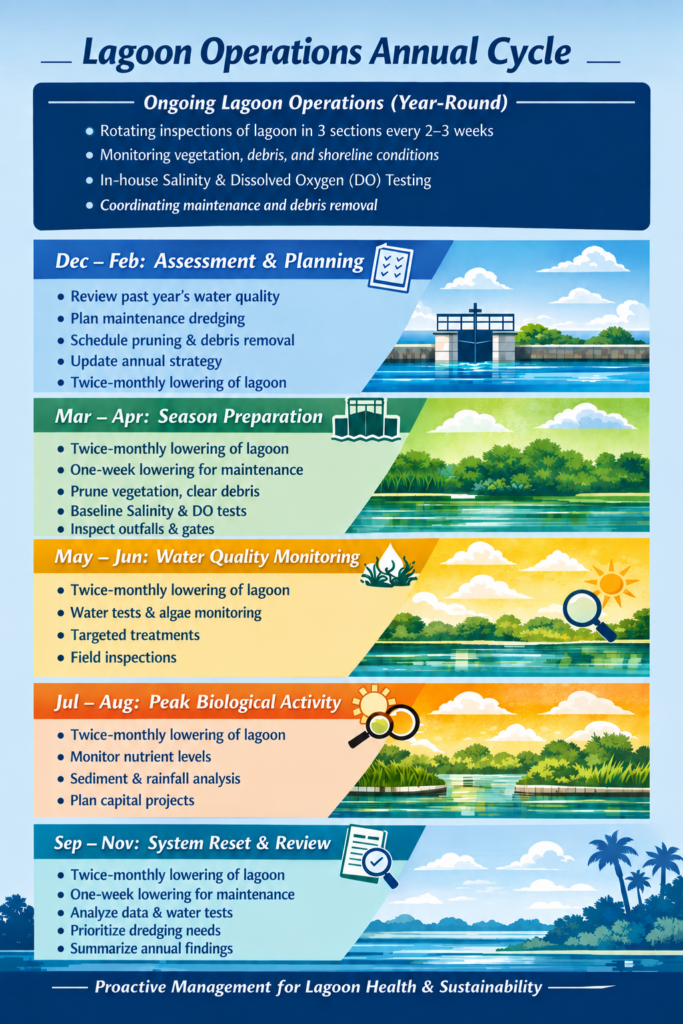
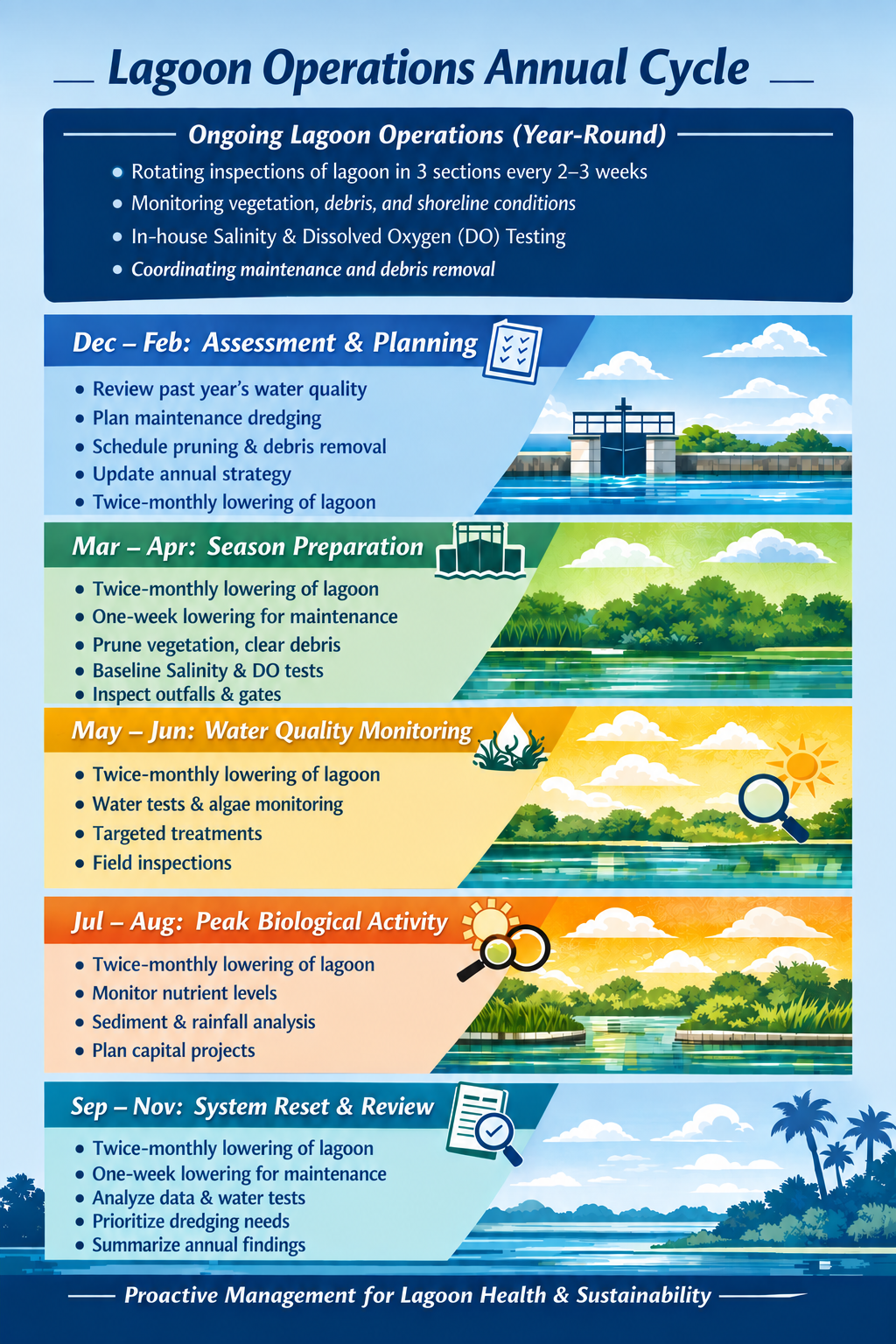
The Lagoon Operations Annual Cycle organizes our work into a consistent, year-round approach to monitoring, maintenance, and planning. This structure allows us to stay proactive, identify issues earlier, and align day-to-day operations with long-term goals.
What You May Notice
As part of managing a natural system, conditions will vary throughout the year. Residents may notice changes in water levels, seasonal shifts in clarity, or ongoing maintenance such as pruning and debris removal. These are expected and reflect active management of a dynamic coastal system.
Our Commitment
The lagoon system is one of Palmetto Dunes’ most important assets. Through a combination of flushing, pruning, dredging, and data-driven monitoring, we are strengthening how the system is managed.
Our focus is simple: protect its function, maintain its beauty, and ensure it continues to serve the community for years to come.
Why does the lagoon water level go down sometimes?
Water levels are periodically lowered to improve circulation and help flush excess nutrients from the system. This is one of the most effective ways to support overall lagoon health.
Why does the water sometimes look green or murky?
Changes in color are often caused by natural factors like algae growth, temperature, and rainfall. Warmer weather and nutrient levels can lead to temporary changes in clarity.
Are algae normal in the lagoon?
Yes. Some algae are a natural part of any water system. Our goal is to manage conditions so that algae does not become excessive or harmful.
Why are crews pruning vegetation around the lagoon?
Pruning improves water movement, reduces organic buildup, and helps maintain both the health and appearance of the lagoon system.
What is dredging, and why is it needed?
Over time, sediment builds up in the lagoon, reducing depth and water capacity. Dredging removes this material to restore proper function and improve water quality.
Does the lagoon connect to the ocean?
The lagoon system is influenced by tides through controlled connections, making it a brackish system—a mix of fresh and salt water.
Is the lagoon water tested?
Yes. We routinely monitor water quality, including salinity, oxygen levels, and other indicators, to understand how the system is performing.
Can residents help protect the lagoon?
Yes. Avoid blowing grass clippings or debris into the lagoon, minimize fertilizer use near water, and report unusual conditions when observed.
The lagoon is a shared community asset, and maintaining its health is a collective effort between Property Operations and residents.